Mayor Luke Campbell has confirmed continued support for community organisations as Hull and East Yorkshire partners begin testing a new Neighbourhood Health and Prosperity model
Community and voluntary organisations across Hull and East Yorkshire will receive continued Local Growth Fund support until March 2027, giving them greater certainty while HEYCA, the Humber and North Yorkshire Integrated Care Board and partners move a new joined-up neighbourhood approach from design into practical testing.
Mayor Luke Campbell MBE has confirmed continued Local Growth Fund support until March 2027, helping local organisations keep supporting people while Hull and East Yorkshire Combined Authority (HEYCA), the Humber and North Yorkshire Integrated Care Board (ICB) and wider partners develop the new Neighbourhood Health & Prosperity model.
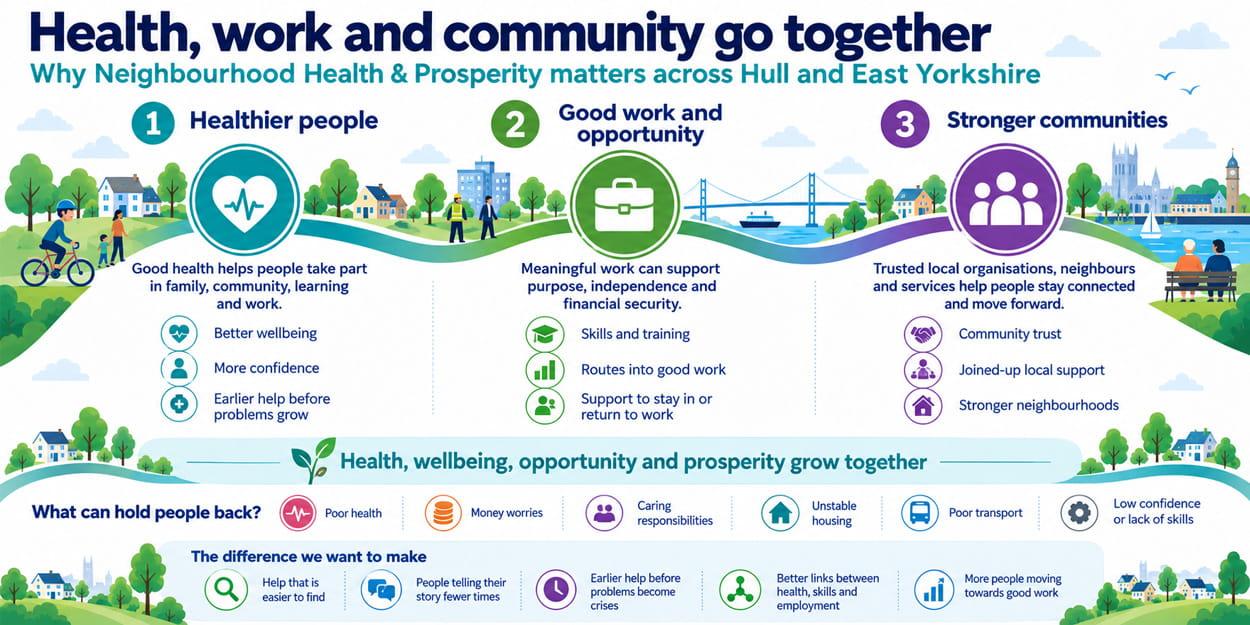
The decision follows months of work between HEYCA, local councils and community organisations after UK Shared Prosperity Fund support came to an end and the funding available locally reduced. It gives valuable organisations more certainty while partners build a stronger, more joined-up approach for the future.The new model brings health, skills, employment and community support together around people and place. The aim is to make it easier for residents to get the right help earlier, reduce the number of times they are passed between services and help more people move towards healthier, more secure lives and good work.
A clearer way forward after UKSPF
The change in funding created real uncertainty for community organisations doing important work across Hull and East Yorkshire. The new Local Growth Fund is a different programme with different priorities, so the response has not been to recreate the old arrangements.
Instead, Mayor Luke asked the Combined Authority to work with councils, the ICB and local organisations on a way forward that protects valuable community capacity while building a clearer long-term role for those organisations in the new neighbourhood model.
That work has turned a difficult funding transition into an opportunity to tackle a wider problem: residents too often having to navigate separate organisations, repeat their story and work out for themselves where health support ends and employment, skills or community support begins.
Built with the people who will make it work
The model has not been designed by HEYCA or the ICB behind closed doors. It has been built through partnership discussions and design sessions involving community organisations, local government, health, primary care, employment and skills partners and neighbourhood representatives.
Two roundtables in late 2025 and early 2026 helped establish a shared direction around poor health, economic inactivity and neighbourhood renewal.
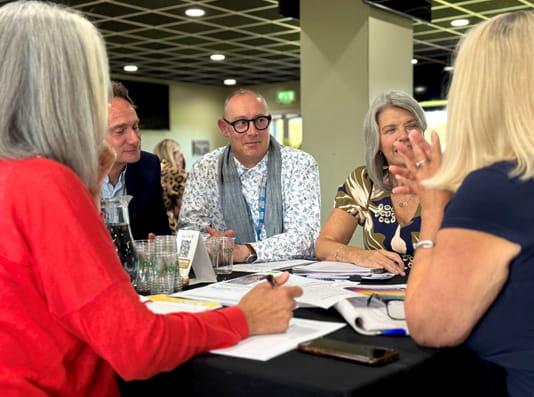
That work moved into practical design on 20 July, when more than 80 leaders and practitioners came together at the MKM Stadium for a whole-system session. They used neighbourhood intelligence, lived-experience personas and journey mapping to test what a more joined-up system should actually feel like for residents.
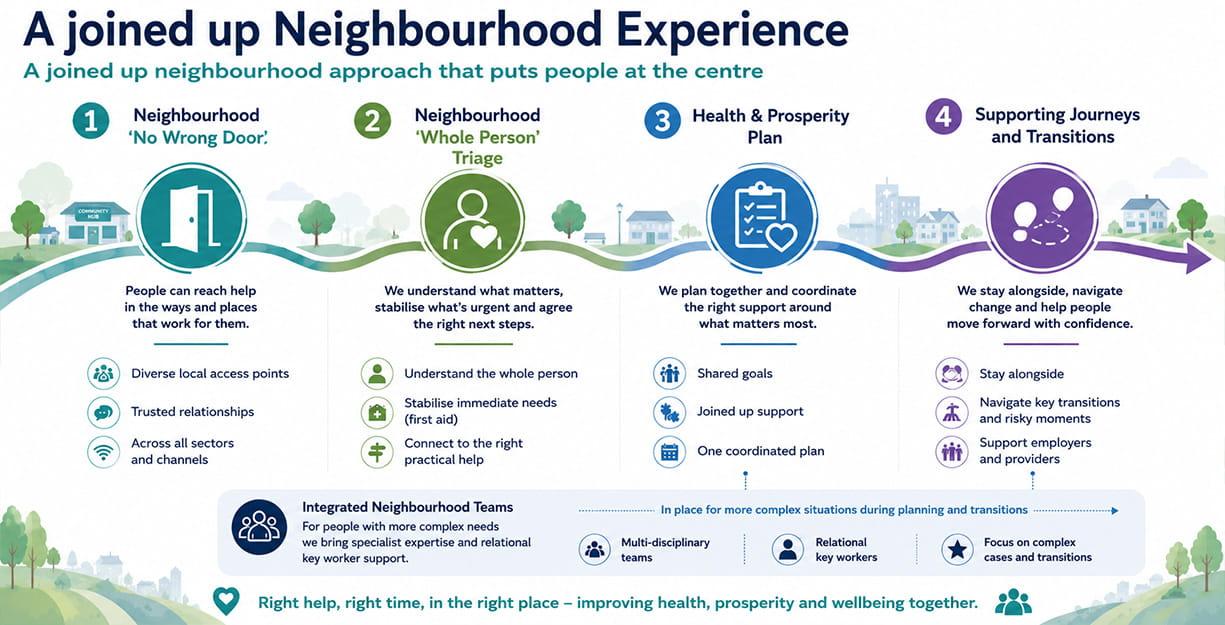
The result is an emerging model built around earlier help, a no wrong door approach, understanding the whole person, one coordinated plan where several organisations need to help, and support that stays alongside people as their circumstances change.
Mayor Luke: 'The bit I care about is what this feels like for somebody who needs help'
Mayor Luke Campbell MBE, mayor of Hull and East Yorkshire said:
“Community organisations are at the heart of our neighbourhoods and make a real difference to people’s lives every day. I’m pleased we’ve been able to provide this certainty while we build a better way of working together on one of my top priorities.
“We’ve listened to local organisations, recognised the challenges they face and worked with them to find a positive way forward. I’m proud of how our team, the councils, the ICB and community organisations have worked through this together.
“The bit I care about is what this feels like for somebody who needs help. If someone is struggling with their health, out of work or just needs a bit of support getting back on their feet, they shouldn’t have to understand which organisation runs which programme or be passed from pillar to post. They should be able to ask for help and get pointed in the right direction.
“By bringing together health, skills, employment and community support, we can help more people into good work, improve health and strengthen our neighbourhoods. I believe Hull and East Yorkshire has the opportunity to lead the way nationally with this approach.”
What residents should notice
For residents, the test is simple: does support feel easier to find, more joined-up and more useful? Four ideas sit at the centre of the proposed neighbourhood experience:
1. No wrong door - People should be able to ask for help through a trusted local organisation and get a useful response, rather than being turned away because they contacted the wrong service.
2. See the whole person - Support should start with what matters to somebody, including their strengths, circumstances and goals, not only the issue that first brought them through the door.
3. One joined-up plan - Where several organisations need to help, support should be coordinated around shared goals rather than creating a separate plan for every service.
4. Support through change - People should not simply be referred on and left to navigate the next step alone. Support should stay alongside them as they move through changes in health, confidence, skills and work.
East Hull and Bridlington will test the model
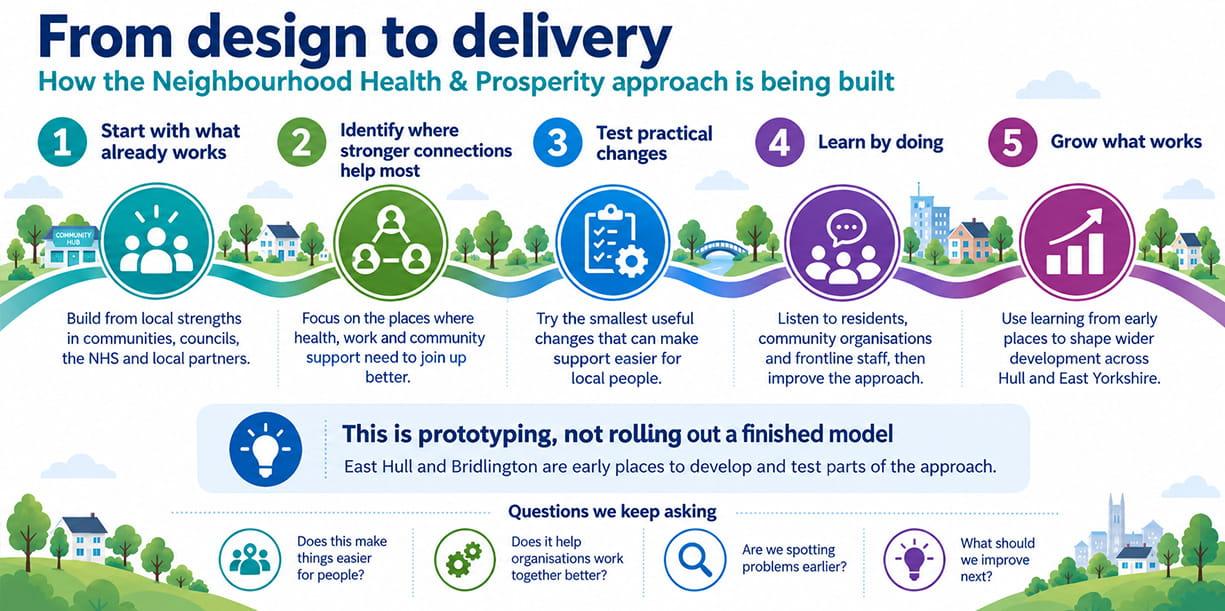
East Hull and Bridlington will be the first places to develop and test parts of the model in real conditions during autumn 2026.
This is not the rollout of a finished service. Partners will start with what already works locally, test practical changes, listen to residents and frontline staff and use the evidence to decide what should be strengthened, changed or stopped.
The first phase will look at whether the approach makes support easier to access, reduces duplication, helps organisations work together more effectively, identifies problems earlier and makes better use of existing resources.
Learning from East Hull and Bridlington will also connect with the five Pride in Place neighbourhoods across Hull and East Yorkshire and help shape how the approach develops for different urban, rural and coastal communities.
Joining up what we already have
The approach is not about creating another organisation or another layer of bureaucracy. It is about making the powers, programmes and services already here work better together around people and place.
HEYCA can bring its Mayoral convening role, Connect to Work, the Adult Skills Fund, Local Growth Fund investment, transport planning and relationships with employers. The ICB brings NHS commissioning, neighbourhood teams, clinical leadership and wider health partnerships. Councils, primary care, community organisations and employers bring local services, trusted relationships and neighbourhood knowledge.
Together, those tools can support one shared aim: helping people become healthier, more economically active and better connected to opportunity while strengthening the neighbourhoods in which they live.
Turning strategy into something people can feel
Neighbourhood Health & Prosperity connects directly to the Mayor’s Gameplan and HEYCA’s Local Growth Plan, which recognise that health, skills, employment and access to opportunity are closely linked to productivity and long-term prosperity.
Attracting investment and creating jobs matters, but so does making sure local people are healthy enough, skilled enough and supported to take those opportunities. The neighbourhood model is intended to turn that strategy into a better everyday experience for residents, rather than another standalone programme.
What happens next?
HEYCA and the ICB will now work with partners in East Hull and Bridlington to agree the first practical tests, establish a shared design and delivery team and create a regular learning cycle so decisions can be made quickly as evidence develops.
Over the following months, partners will use that learning to decide what should be expanded, adapted or stopped and how future commissioning and investment can be aligned more closely around neighbourhood outcomes.
The long-term ambition is not one fixed service model. It is a stronger local system where residents can get the right help earlier, community organisations remain part of the solution, public services work together more effectively and more people are able to improve their health, take part in work and fulfil their potential.